How to use the Seated Reverse Fly Machine (Reverse Pec Dec)

The machine seated reverse fly, also called the reverse pec deck, is designed to isolate and strengthen the posterior delt, a muscle on the back side of your shoulders.
This often-underdeveloped muscle play a role in building balanced, rounded shoulders, improving posture, and stabilizing your shoulder joint during pressing and pulling movements.
The rear delts are the primary movers in this exercise, performing horizontal abduction (moving the arms outward from the body). Supporting muscles of this movement include the rhomboids and traps, which stabilize the shoulder blades, as well as the teres minor and infraspinatus, which assist with external rotation.
Because of how the machine’s resistance curve is built, the exercise challenges the rear delts most in their shortened position, when the arms are straight out to the sides.
The most common complaint: Feeling Rear Delt Flys in Your Traps (Neck) Instead of the Rear Delt
One of the most common complaints about the reverse pec deck is feeling it more in the traps instead of your rear delts.
Here’s a few reasons why that happens:
The upper traps elevate and retract the shoulder blades (shrugging and pulling back)
The rear delts, on the other hand, are responsible for moving the arms out to the side, not for pulling the shoulder blades together
When your form and execution aren't up to standard, you shift the load away from the rear delts and into the traps and rhomboids.
How to Execute the Machine-Seated Reverse Fly (Reverse Pec Dec)
Here’s a step-by-step breakdown, plus a demo video:
Adjust the arms or pins all the way forward so you can start from a full stretch with your hands close together
Set the seat height so the handles are level with or slightly above your shoulders
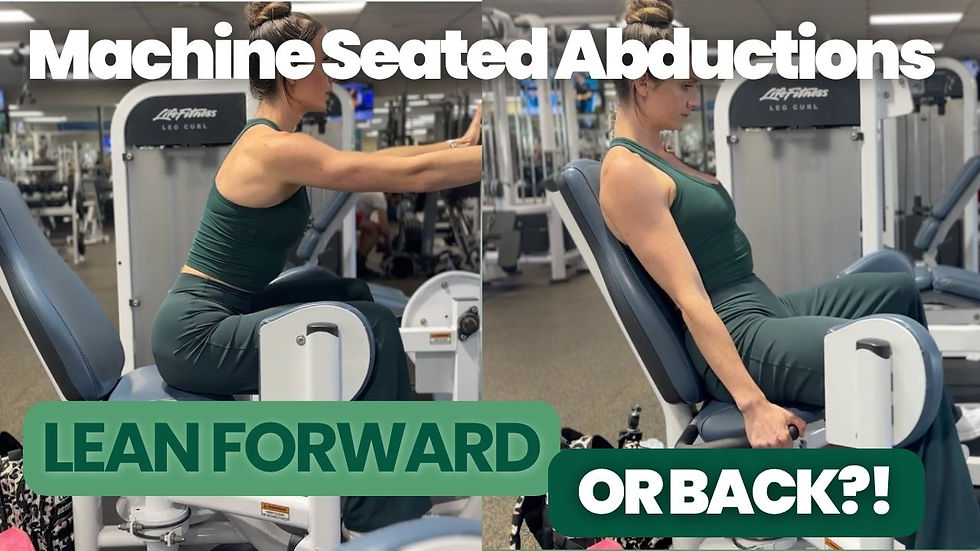
Sit with your hips back and lean slightly forward into the pad, keeping your chest anchored into the pad
Take a light grip on the handles. Think about pressing through the outer edge of your hand rather than squeezing tightly. This keeps tension in your rear delts instead of your forearms.
Keep a slight bend in your elbows, and maintain that same angle throughout the entire set.
Focus on driving your hands outwards and wide, instead of backward, until your arms are in line with your shoulders.
Pause briefly at the top to feel the rear delts contract.
Slowly return to the starting position with control, keeping the tension on your delts by not letting the weight stack touch
Top Cues
To better isolate the rear delts, you want to:
✅ Sit with your hips a little farther back, then lean your chest forward into the pad
✅ Keep your chest anchored to the pad and shoulders slightly depressed (down, not shrugged).
✅ Lightly grip the handle and think about driving your hand out wide through the handle
✅ Maintain a soft bend in your elbows and drive just to the shoulder. Avoid over-reaching your range of motion and squeezing your shoulder blades together at the end of the movement.
The rear delts don’t pull your shoulder blades together, so avoid squeezing your scapula excessively at the end. Stop when your arms are even with your shoulders to keep the focus right where you want it.
That combination helps you feel the contraction directly in the rear delts, minimizes upper-trap engagement and ensures you are training the muscle the exercise is intended to target.
Common Mistakes to Avoid
❌ Shrugging your shoulders: This shifts the work into your upper traps. Keep your shoulders down and neck long.
❌ Using too much weight: If your elbows start bending or your chest lifts off the pad, the load is too heavy.
❌ Letting the weight stack touch: Keep constant tension by stopping just before the plates make contact.
❌ Pulling too far back: Once your arms are in line with your shoulders, that’s enough. Anything beyond that moves tension away from the rear delts.
The Bottom Line
The machine seated reverse fly can be a great way to isolate and strengthen your rear delts when performed with proper setup and control. By adjusting your seat height, body angle, and hand position, you can keep tension exactly where it belongs.
If you’re feeling this more in your traps than your rear delts:
✅ Take a form video from the side to check your posture and arm path
✅ Make sure you’re leaning slightly forward into the pad, not sitting fully upright
✅ Focus on driving your hands out wide, not back behind you
And if you’re still unsure what’s off... that’s exactly what I help my clients with. ☺️
I review form videos for every client and walk them through the exact tweaks needed to properly engage their muscles and make every rep count.
💡 If you’re tired of guessing whether you’re training correctly, coaching can help. I offer custom 1:1 coaching plans tailored to your goals, as well as a budget-friendly group coaching program that provides structure, accountability, and support.
Both options are designed to take the guesswork out of your training and nutrition so you can build a strong, confident body, in a sustainable way.