How to Eat for Strength Training: Why Carbs Matter More Than You Think
Why Carbs Matter More Than You Think for Strength Training
One of the biggest disconnects I see with women who strength train is this:
They are training for muscle, strength, and shape, but still eating like their only goal is to make the scale smaller.
If you are lifting weights three, four, or five days a week, working hard in the gym, and still feeling like your strength, recovery, or body composition isn't improving, your training may not be the problem.
If your goal is also to build your glutes, add definition, get stronger, and actually look like you lift, your body needs enough fuel to support that process.
And this is where carbs tend to get unfairly cut first.
Carbs get blamed for weight gain, bloating, or “looking soft,” so women start eating less of them while also asking a lot from their training.
The result?
You are trying to progressively overload, push hard sets, recover between sessions, and build muscle, while taking away one of the main fuel sources that helps you actually perform that training.
That is the contradiction.
Muscle is not built just because you showed up and lifted weights. Your workout creates the stimulus for change. Your body still has to recover from that training and adapt to it afterward.
Protein gives your body the building blocks it needs for muscle repair and growth.
Carbohydrates help give you the energy to create a better training stimulus, and also keep your body from using protein (or breaking down muscle) for energy.
So if you are consistently training hard but your lifts have stalled, your workouts feel flat, you are constantly exhausted, or you feel like your physique is not reflecting the work you're putting in, the answer is very likely not to eat even less.
Sometimes, you need to fuel the goal instead of continuing to diet against it.
If your goal is to build muscle and improve your body composition, your nutrition has to support the work you are asking your body to do.
And yes, that includes carbs.
Weight Loss and Body Composition Are Not the Same Goal
Before talking about carbs, we need to separate two things that constantly get blended together: weight loss and body composition.
Weight loss simply means the number on the scale went down.
Body composition refers to how much of your body is made up of things like muscle and body fat.
You can lose weight without building much muscle.
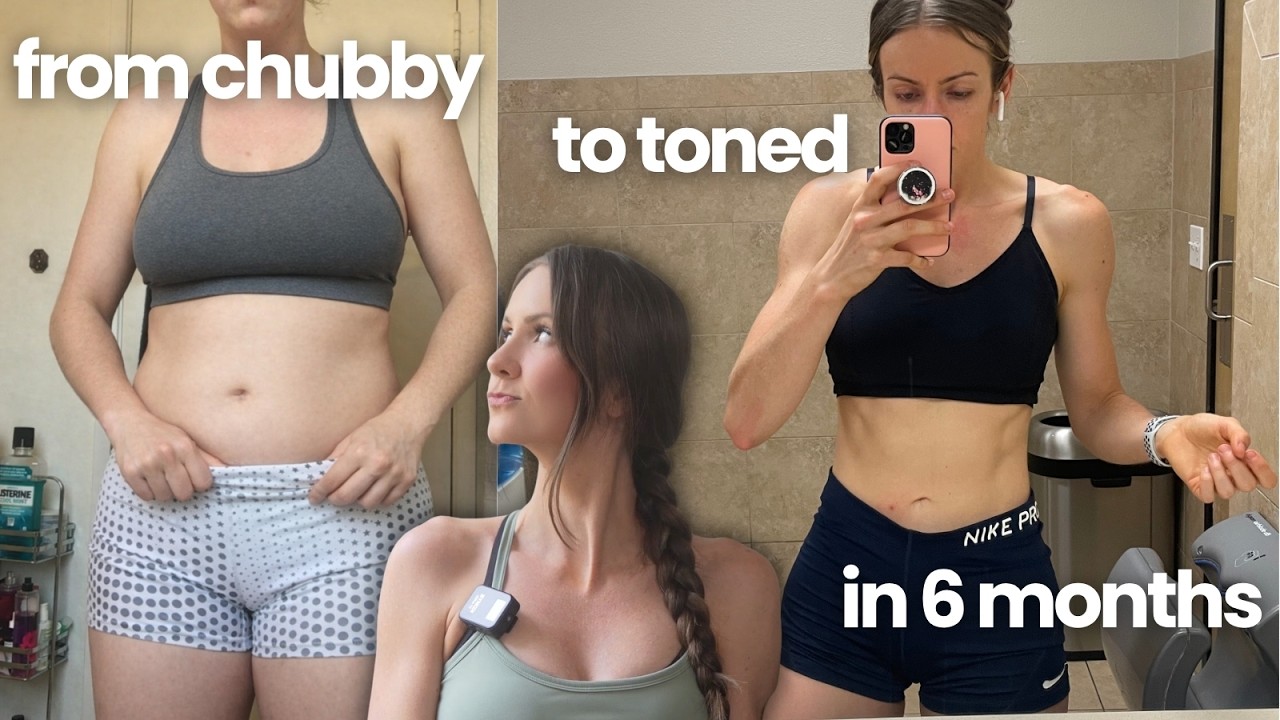
You can maintain roughly the same body weight while looking noticeably leaner and more defined.
You can even gain some weight while creating a physique that looks more athletic and fit.

Why?
Because if what you really want is the look most women describe as “toned,” you generally need two things:
Enough muscle to create shape and definition
A body-fat level that allows some of that definition to show
That means the goal is not simply to eat less and weigh less. You need training that gives your body a reason to build or maintain muscle, and nutrition that actually gives it the resources to respond.
Do Carbs Help Build Muscle?
Protein gets labeled the muscle-building macro, while carbs get treated like the thing standing between you and your abs.
The reality is more nuanced.
Protein provides the amino acids your body uses to repair and build muscle tissue, and Carbohydrates don't build muscle in that same direct way, but what carbs do extremely well is support the training that gives your body a reason to build muscle in the first place.
When you eat carbohydrates, some of that carbohydrate is stored as glycogen in your muscles and liver. Resistance training uses muscle glycogen, especially as training volume increases.
This is the result:
Carbs → fuel available for training → better ability to perform hard sets → better training stimulus → better opportunity to recover and adapt, and actually see results.
Should You Avoid Carbs If You Strength Train?
In most cases, no. Especially if you actually want to perform well in the gym.
If you are lifting three, four, or five days a week, pushing hard sets, training close to failure, and trying to progressively overload, your body needs energy to do that work.
And carbohydrates are one of the main ways your body fuels that kind of training.
When you eat carbs, they can be stored in your muscles as glycogen. Think of glycogen as energy your muscles can pull from when you need to push through a hard set, get those last few reps, or maintain your performance across an entire workout.
So when carbs are consistently too low, you may still be able to complete your workouts, but that doesn't mean you are getting the most out of them. And this matters because building muscle requires more than just showing up and moving weight around.
You need to create enough tension and effort in your workouts to give your body a reason to adapt. Then you need enough food and recovery afterward to actually support that adaptation.
So if your goal is to build your glutes, get stronger, add muscle, or improve your body composition, aggressively cutting carbs can become pretty counterproductive.
The harder you are asking your body to perform, the more relevant adequate fueling becomes.
The question is:
Is your current carbohydrate intake supporting the level of training you are trying to do?
Because there is a major difference between simply getting through a workout and consistently performing well enough to progressively overload over months and years.
Your workout creates the signal.
Recovery is where your body gets the opportunity to respond to it, and actually change.
What Happens If You Don't Eat Enough Carbs for Strength Training?
Unfortunately, there is no single symptom that proves your carbs are too low.
But when someone is combining hard strength training with chronically low food intake, poor fueling often starts showing up in their training and recovery.
Carbs are stored in your muscles as glycogen, and that glycogen helps fuel the hard, repeated efforts you are doing in the gym. So when carbs stay too low for the amount of training you are doing, one of the first places you may notice it is inside your workouts.
You may notice:
your strength has stopped progressing
you lose steam halfway through your workout
training feels harder than it normally should
you have a hard time getting a muscle pump / good connection to the target muscle
you are persistently sore between sessions
your recovery feels poor
your energy crashes later in the day
you think a lot about food, recipes, what to eat next
hunger and cravings become harder to manage
you struggle to consistently push hard in training
you are constantly sore or taking longer to recover
you leave the gym feeling like you survived it instead of actually performed well
And it usually does not stop when you leave the gym.
When you are consistently under-fueled, you may also start noticing that you are tired all day, thinking about food constantly, getting stronger cravings at night, feeling brain foggy, sleeping worse, or feeling like your appetite is completely out of control.
A lot of women interpret that as: “I have no willpower.”
When sometimes the much simpler explanation is: You're asking your body for more energy than you are giving it.
And, when carbs are very low, your muscles also store less glycogen and the water that comes with it. That can leave your muscles looking and feeling a little flatter, which is pretty ironic when the whole reason you cut carbs was because you wanted to look more “toned.”
So now you are: training harder, eating less, performing worse, recovering worse, feeling hungrier...
…and wondering why your body is not responding the way you wanted.
That does not mean every bad workout or craving means you need more carbs. Sleep, stress, total calories, hydration, training volume, and plenty of other things matter too.
But if several of these signs are showing up together, and you are strength training hard while keeping carbs very low, that is worth paying attention to.
And if your overall food intake stays too low for too long, the consequences can become bigger than a bad leg day. More significant issues can develop. Persistent fatigue, menstrual-cycle changes (or loss of it), sleep disturbances or other concerning symptoms.
The point is:
If you are training hard while consistently under-fueling your body, more restriction is probably not the right move.
How Many Carbs Should You Eat for Strength Training?
Here comes everyone's least favorite answer:
It depends.
There is no magical number that works for every woman who strength trains. Your needs change based on things like:
body size
total calorie needs
training frequency
training volume
daily activity
whether you are maintaining, gaining, or losing weight
food preferences
your current diet
how your training and body respond
This is why copying someone's macros from Instagram does. not. work.
Their body is not your body.
Their training is not yours (even if its the same exercises)
And even your own ideal intake will change as your goals and training change.
A better way to set your macros
For someone strength training with a body-composition goal, I generally think about nutrition in this order:
1. Set total calories based on the current goal.
Are you trying to lose fat, maintain, or intentionally build?
2. Get enough protein.
For resistance-trained adults, roughly 1.6 to 2.2 grams of protein per kilogram of body weight per day, about 0.7 to 1.0 gram per pound, is a useful evidence-based range for many people.
3. Include enough dietary fat.
Fat should not be slashed to nothing just so you can squeeze more protein or carbs into your macros.
4. Use carbohydrates to fill much of the remaining energy based on your training needs and preferences.
Someone training five high-volume days per week may thrive on considerably more carbohydrate than someone doing two short workouts per week.
AND, Your macros are a starting guestimate.
Set them, track how your body, results and training responds, and adjust from there.
Should You Eat Carbs Before Strength Training?
For most people, yes. Eating before lifting can provide energy for the session, and a meal or snack containing carbohydrate plus protein is a practical option.
What should you eat before lifting?
If you are eating a full meal a few hours beforehand:
Protein + carbohydrate + a reasonable amount of fat/fiber
For example:
chicken, rice and vegetables
Greek yogurt, oats and berries
eggs, toast and fruit
turkey, potatoes and vegetables
If you are eating much closer to your workout, you may want something smaller and easier to digest. Think more "snack" like:
banana + Greek yogurt
fruit + protein shake
toast + egg whites
cereal + whey protein + low fat milk
rice cakes + protein shake
Just a little something that fuels you, without making your stomach feel unwell.
Should You Eat Carbs After Strength Training?
Carbohydrates can also be useful after training because they help replenish glycogen you used during your workout.
But you do not need to sprint from the squat rack to your car because you missed a 17-minute “anabolic window.”
For most women in the gym, your overall daily intake matters waaaay more than obsessing over perfect minute-by-minute timing.
After training, eating a normal meal containing protein + carbohydrates is a perfectly fine approach.
Examples:
lean beef + potatoes
chicken + rice
Greek yogurt + fruit + cereal
protein smoothie + fruit + oats
fish + quinoa
If you train multiple times per day or have very demanding training volumes, then timing becomes more important.
For most women lifting a few times per week, keep it practical.
What Are the Best Carbs for Strength Training?
There is no single “muscle-building carb.”
Build most of your diet around carbohydrate sources that provide a useful mix of energy, fiber, micronutrients and enjoyment.
Some great options include:
Fruit: berries, bananas, apples, kiwi, oranges
Starches and grains: rice, potatoes, oats, quinoa, whole-grain bread, pasta
Legumes: beans, lentils, chickpeas
Other convenient options: cereal, wraps, rice cakes, granola and similar foods can absolutely fit too
You do not need to eat dry chicken, broccoli and sadness six times a day to make progress.
A useful framework is to build the majority of your intake around nutrient-dense foods, while leaving room for flexibility and your actual life. I like to use an 80/20-style approach, with most intake coming from nutrient-dense staples (like the above) while still making room for meals you genuinely enjoy, like pizza.
Can You Eat Carbs and Still Lose Weight?
Absolutely.
Fat loss does not require carb elimination.
If your goal is fat loss, the bigger-picture goal is to create an appropriate calorie deficit while maintaining as much muscle, training performance and adherence as you reasonably can.
That means you still need:
Protein.
Good strength training.
Recovery.
Enough food to make the plan sustainable.
Your carbohydrate intake may be lower during a fat-loss phase simply because you have fewer total calories available.
But lower does not automatically need to become zero.
For someone who loves strength training, aggressively stripping carbs from the diet can also make the dieting experience much harder if training quality, hunger, cravings or adherence suffer.
Fat loss can coexist with carbohydrate intake, while the goal remains preserving muscle and training quality.
Do Carbs Make You Gain Weight?
POV: You increase your carbs.
The scale goes up.
You immediately decide:
“THE BREAD HAS BETRAYED ME.”
Not necessarily.
When carbohydrate intake increases, your body can store more glycogen, and glycogen is stored with some water.
So an increase in carbohydrate intake can produce a short-term increase in scale weight from glycogen and water, without meaning you suddenly gained that amount of body fat.
This is one reason you should not judge the success of a nutrition change from tomorrow morning's weigh-in.
Look at trends.
Look at several weeks.
Look at training performance.
Look at measurements.
Look at how your body composition is actually changing.
The scale is one data point, not the CEO of your entire fitness journey.
So, What Should You Actually Eat for Strength Training?
If you want to build muscle, improve your strength, recover well and change your body composition:
✅ Eat enough total food for your current goal
✅ Prioritize protein consistently
✅ Use carbs to support the training you are actually doing
✅ Build most meals from nutrient-dense foods you genuinely enjoy
✅ Adjust your nutrition based on your progress, performance and recovery
You don't need a perfect diet, just a nutrition strategy that actually matches the body you are asking your training to build.
Feed the body you are trying to build.
And if you are tired of guessing how much to eat, what your macros should be, or whether your training and nutrition actually match your goals, that is exactly where coaching can help!
I offer custom 1:1 coaching built around your body, your goals, your training and your real life, as well as a budget-friendly group coaching program for women who want structure, accountability and a plan without having to piece everything together themselves.