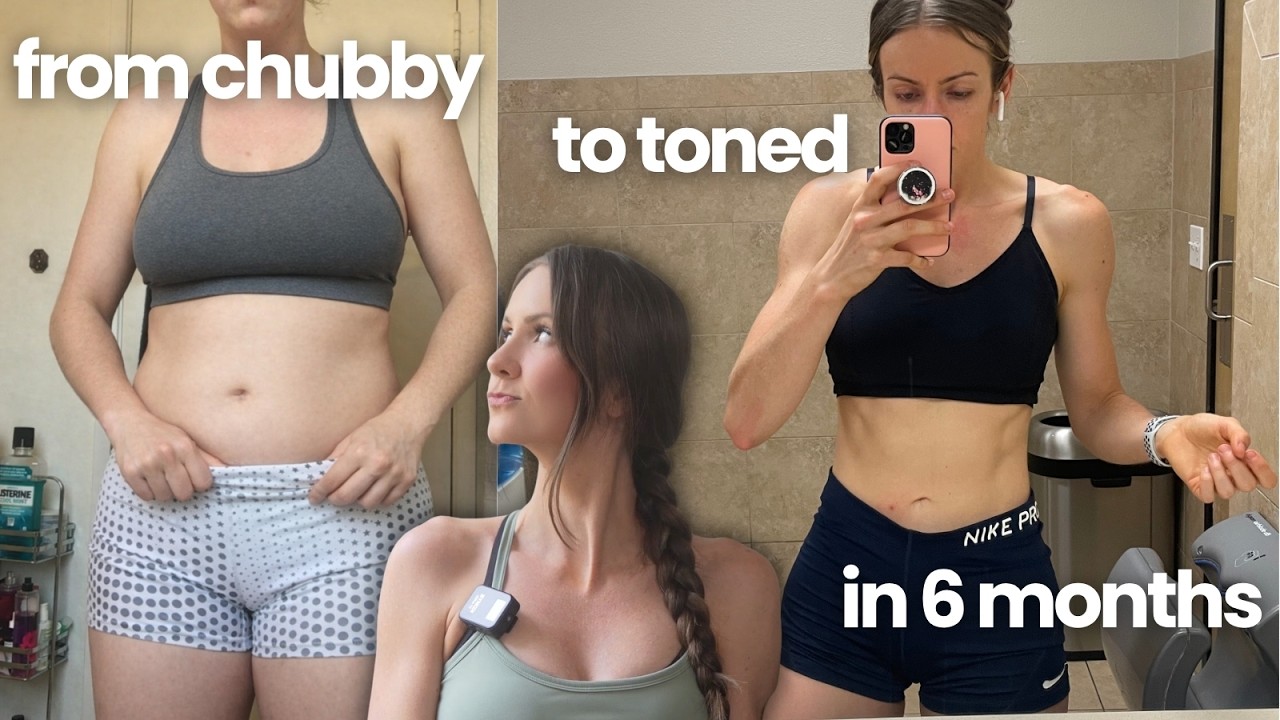
How a Mom With Hypothyroidism Lost 24 Pounds in 7 Months by Working Out Less

Hiral came to me after being stuck at the same postpartum weight for over a year. She was working out five days a week, doing 45+ minutes of cardio each time, and still wasn't seeing the progress she wanted.
Seven months later, she had lost 24 pounds, and was actually working out less.
Whats the difference? This busy momma stopped trying to blindly do more and started focusing on what actually worked.
The truth is, she didn't need another workout. She was already working out five days a week and doing 45+ minutes of cardio every time.
Instead of adding more, we took a step back. Sometimes getting better results doesn't mean working harder. It just means having a better strategy.
Because if effort could be measured, hers was maxed out. She was already putting in a tremendous amount of effort.
She's a full-time mom and homemaker raising her 2 year old son, and her days were busy, unpredictable, and centered around taking care of everyone else.
She was also navigating hypothyroidism, insulin resistance, and an elevated A1C.
She wanted to lose the 20 pounds she'd gained after having her baby. But despite everything she was doing, the scale hadn't moved meaningfully in over a year.
And she was exhausted from trying.
So let's walk through exactly what we did to get more results, with less effort.
She Was Already Doing "Everything Right"
On paper, Hiral was doing what many people assume is necessary for weight loss.
She was:
Working out five days a week
Doing 45+ minutes of cardio every workout
Eating Healthy
But she wasn't seeing the results she wanted. Instead, she felt stuck.
She was spending a huge amount of time in the gym without seeing meaningful progress. She was tired, frustrated, and increasingly disconnected from her body.
And because she was already a busy mom, spending even more time working out felt like one more thing she had to fit into an already demanding life.
She felt guilty for taking "so much time" of her day and spending it in the gym, but she knew how important it was for her to get healthy. Her doctor constantly reminded her of her elevated A1C.
If you're reading this, chances are good you're a mom too, and you can relate to the struggle she was going through.
And it was clear to me that her goal was bigger than just losing 20 pounds, like her doctor told her to.
The number on the scale wasn't really the end goal. She wanted to:
Feel confident in her body again
Enjoy vacations instead of feeling self-conscious
Wear a swimsuit and actually feel good in it
Have more energy and presence with her son
Feel proud of the effort she was putting into herself instead of guilty
Feel like herself again
She didn't just want to weigh less.
She wanted to feel like herself again.
So what was she doing wrong?
Sure, she was in the gym 5 days a week, but everytime she went in, she was essentially just doing more of the same.
There wasn't really a plan behind what she was doing.
She was following workouts she found from fitness influencers, doing a lot of cardio, and trying to eat "healthy," but there wasn't a clear strategy connecting all of those things back to her actual goal.
And this is where I see a lot of women get stuck.
They think if they're not getting results, they need to do more.
More workouts. More cardio. Less food. More Restriction. More steps.
She would always say, "Oh i cant eat that, I would get so fat." (Talking about carbs).
So lots of women keep adding more and more to their routine, without ever stopping to ask:
Is what I'm doing actually working?
Hiral's answer was pretty clearly no.
She had been doing this for over a year and was still stuck.
So instead of giving her another five-day workout split and telling her to add even more cardio, we went in the opposite direction.
We Cut Her Workouts From 5 Days to 3
The first thing we changed was her training.
We took her from five days of workouts down to three structured strength-training sessions per week.
Yup, three!
Most of my client only train 3-4 days a week.
Why did we actually reduce her workouts?
Because more training isn't automatically better.
Hiral's goal wasn't to burn as many calories as possible. Her goal was to lose body fat, build muscle, and change the way her body looked. She tried the "burning as many calories as possible" strategy for a year, with no results.
She knew she needed something different. We needed to prioritize quality strength training and recovery rather than simply adding more exercise.
Three purposeful strength sessions gave us enough training stimulus to make progress without asking her to spend five days a week in the gym. It also gave her more time to recover, which matters when you're trying to actually build muscle.
The point was to stop wasting time on workouts that weren't moving her toward her goal and start making the time she was spending in the gym, actually count.
Her workouts became much more intentional.
Instead of jumping from one random workout to another, we had a structured plan that allowed us to actually track her progress and progressively challenge her.
This is one of the biggest differences between working out and strength training.
Working out is movement.
Strength training is a strategy.
And when your goal is to change your body, that difference matters.
We Also Took Out the Excessive Cardio
Hiral was doing 45+ minutes of cardio every time she worked out.
That's a LOT of time to spend doing something that wasn't getting her closer to her goal.
Cardio wasn't the problem. The amount of cardio wasn't serving the goal.
There's nothing wrong with high amounts of cardio. But Hiral was already doing 45+ minutes of cardio every time she worked out, and it wasn't producing the results she wanted.
Instead of continuing to add more cardio, we shifted her focus toward strength training, daily movement, and recovery. The goal was to make her workouts more productive, not just "burning calories".
So we took the junk cardio out, replaced it with a realistic daily step goal, so that she could get movement while with her son.
It gave her a way to stay active throughout the day without needing to spend another hour in the gym.
And honestly? This was a huge relief for her.
She was already feeling guilty about how much time she was spending working out.
Now she could spend less time exercising while still having a clear activity target to work toward.
Less time in the gym. More intention behind what she was actually doing.
Then We Looked at Her Nutrition
The next piece was nutrition.
Hiral was trying to eat healthy, but "eating healthy" and eating in a way that actually supports your specific goal are not the same thing.
We needed to look at what she was eating, how much she was eating, what foods she actually enjoyed, and (most importantly) what she could realistically stick to as a busy mom.
I didn't give her a list of foods she was allowed to eat and tell her to survive on chicken and broccoli 😂
Instead, we built her nutrition plan around foods she actually liked and could realistically prepare.
Her plan also needed to take into account the health factors she was navigating, including hypothyroidism, insulin resistance, and an elevated A1C.
This might be the part of Hiral's story that surprises you the most.
When she came to me, she was eating around 1,000 calories a day and very little carbs.... She was aggressively undereating.

She was trying to lose weight, so in her mind, eating less made sense.
But she was also trying to train five days a week, doing 45+ minutes of cardio every time she went to the gym, while giving her body very little fuel to work with.
She didn't need to eat less. She had that maxed out.
So instead of cutting her calories even further, we actually increased them.
And yes, I know what you're probably thinking:
"Wait... she wanted to lose weight, and you gave her MORE food?"
Yes. 😂
But there was an important piece to this equation:
We weren't just giving her more calories and sending her on her way.
We completely changed what she was doing with those calories.
She Needed to Start Training Like She Actually Wanted to Build Muscle
Hiral wasn't just trying to "burn calories" anymore.
We had changed her workout routine so that she was going to train with a purpose.
Her new program was built around intentional strength training and creating an actual muscle-building stimulus.
That meant her workouts weren't about rushing through a circuit, burning as many calories as possible, and then hopping on the treadmill to do another 45 minutes of cardio.
We were focused on things like:
Progressive strength training
Proper exercise selection
Training with intention
Creating enough stimulus to build and maintain muscle
Actually recovering from her training
The goal was no longer to see how much we could make her sweat.
The goal was to give her body a reason to change.
And that distinction is HUGE.
Because if you want to build muscle, you have to actually train for muscle growth. You can't just keep adding cardio and hope your body magically becomes more muscular.
More Food + Better Training = A Completely Different Approach
This is where the pieces started to come together.
We increased her calories so she could actually fuel her training, instead of just rushing through it, while simultaneously giving her body a reason to use that fuel through her strength training.
Her nutrition wasn't just about eating more.
Her training wasn't just about working out less.
The two worked together.
We built her nutrition around foods she actually enjoyed and could realistically prepare as a busy mom, while making sure her overall approach supported the health factors she was navigating.
And because her training was now purposeful, she could spend less time in the gym while getting more out of the time she was there.
That's a completely different approach from:
"I'm trying to lose weight, so I'll eat as little as possible and exercise as much as possible."
Which, honestly, is the trap a lot of women fall into.
You Don't Need to Eat as Little as Possible to Change Your Body
I think this is one of the biggest misconceptions women have about fat loss.
They assume:
Less food = faster results.
More cardio = faster results.
But your body isn't a math equation where you just keep taking things away until you get the result you want.
Your training, nutrition, recovery, activity, and goals all have to work together.
One of the biggest misconceptions I see with women trying to lose weight is that the answer is always to eat less.
But if you've already been restricting your food, doing tons of cardio, and getting nowhere, the answer isn't necessarily to restrict harder.
Sometimes the better strategy is to step back, look at the entire picture, and ask: Is what I'm doing actually supporting the result I'm trying to create?
For Hiral, we didn't get her results by continuing to take things away. She got her results by adding things in. We gave her more fuel, gave her better training, and gave both of them a purpose.
And that ended up being a much more effective approach than what she'd been doing before.
And Then the Results Started Coming
After being stuck at the same postpartum weight for more than a year, Hiral finally started seeing the scale move.
And not because we added more.
Not because she started spending more time in the gym.
Not because we put her on some extreme diet.
And she lost 24 pounds in seven months, while working out less.

And the changes weren't just happening on the scale.
She started feeling more confident in her body.
She started looking forward to vacations instead of worrying about how she would feel in a swimsuit.
She started wearing shorts again.
She had more time and energy for her son.
And she felt proud of the effort she was putting into herself instead of feeling guilty about it.
That's the part of this transformation that I think is most important ☺️
The Goal Was Never Just to Lose 24 Pounds
Yes, 24 pounds is a significant result.
But that's not really what this transformation was about.
It was about getting Hiral out of the cycle of:
"I'm not getting results → I need to do more → I'm exhausted → I can't keep this up → I feel guilty → I try even harder."
Instead, she learned that she didn't need to constantly push harder to make progress.
She needed to understand what actually mattered.
And that's a lesson I want every woman I work with to walk away with.
You don't need to spend your life dieting and working out to have a body you feel strong, healthy and confident in.
You just need a strategy that works.
One that fits your life.
One that you understand.
And one that you can actually maintain.
What Her Transformation Teaches Us About Sustainable Weight Loss
Hiral's transformation is a great example of why more isn't always better.
She didn't need five workouts a week.
She didn't need hours of cardio.
She didn't need to keep pushing harder and harder.
She needed a structured approach to strength training, nutrition, and daily activity that made sense for her body, her circumstances, and her life.
Her story isn't about doing less and magically losing weight.
It's about doing what matters most... and eliminating the things that weren't helping.
That's what sustainable progress can look like.
Not more punishment.
Not more restriction.
Not more hours in the gym.
Just, A better strategy.
What I Want You to Take Away From Hiral's Story
If you're a mom who's been trying to lose weight and feel better in your body, but you're frustrated because you're already doing "everything" and nothing seems to be working, Hiral's story is a good reminder:
More isn't always the answer.
Sometimes you need to step back and look at what you're actually doing.
Are your workouts structured?
Are you progressively getting stronger?
Are you doing cardio because you enjoy it—or because you think you have to?
Is your nutrition actually supporting your goal?
The Building Your Body Approach
This is a big part of why I created The Building Your Body Recomp Method.
I don't want women to spend years chasing the next diet, workout, or fitness trend.
I want to help every woman who's struggling understand why you're doing what you're doing.
Through coaching, we focus on building the skills and knowledge you need to:
Strength train with a clear and easy plan
Eat in a way that supports your goals
Understand how your nutrition affects your progress
Make adjustments when life "starts to life"
Build muscle and lose body fat
Create results you can actually maintain
Our goal is to teach you how to build your body, and eventually know how to do it yourself.
Want to Build Your Body Without Living in the Gym?
If you're working hard but aren't seeing the results you want, you may not need more.
You may need a better strategy.
Building Your Body Coaching helps women build muscle, lose body fat, and get stronger through personalized strength training, nutrition, education, and coaching.
💡 If you don’t want to figure out all of this on your own, coaching can help. Custom 1:1 coaching plans are designed to take the guesswork out of training and nutrition to help you build a strong, confident body in a way that’s sustainable.